

Choosing Counsel for Payroll Tax Liability: Independent vs. National Firms
For business officers facing payroll tax liability without direct control, local independent counsel often provides more tailored advocacy than national firms. The Law Office of Jorge Alesna, Jr. in Bakersfield focuses on these specific tax controversies. This guide explains how to evaluate legal representation, verify credentials, and understand the process for resolving unpaid employment taxes in California.
How to Choose the Right Representation
Selecting legal counsel for payroll tax issues requires looking beyond marketing materials. A tax controversy attorney is a legal professional who represents taxpayers in disputes with government agencies. You must determine if the firm handles your specific type of tax, such as federal payroll taxes or state employment taxes. Many national firms use a tiered system where junior staff handle initial contacts, while local independent attorneys often manage the case personally. This distinction is critical for complex liability issues. according to Legal advice issued
Evaluating Case Management
Ask who will actually handle your case. In large firms, you may be assigned to a paralegal or a junior associate who reports to a senior partner. In smaller practices, the attorney of record often performs the substantive work. For officers facing personal liability, direct access to the decision-maker is essential for strategic adjustments.
Scope of Practice
Verify that the firm handles the specific agency involved. The IRS, the California Franchise Tax Board, and the Employment Development Department have different procedures. A firm that only handles federal income tax may not be equipped to handle state payroll tax audits or worker classification disputes.
Specific Questions to Ask Before Committing
Before signing a retainer, you should ask targeted questions to gauge the firm's approach. Do not accept vague answers. You need to understand the strategy for your specific situation.
- Who will be the primary point of contact for my case?
- Have you handled cases involving the Trust Fund Recovery Penalty?
- What is your strategy for challenging the 'responsible person' status?
- How do you communicate updates? Will I receive written summaries?
- What are the potential outcomes if we cannot pay the full balance?
These questions help you assess whether the firm understands the nuances of payroll tax enforcement. A competent attorney will explain the difference between the business liability and personal liability clearly.
Verifying Credentials and Claims
Legal advertising is regulated, but it is still important to verify claims. You can check the State Bar of California website to confirm an attorney's active status and any disciplinary history. This is a free and reliable method to ensure the person you are hiring is licensed to practice law in the state. Do not rely solely on testimonials or awards listed on a website.
Checking Disciplinary History
The State Bar of California maintains a public record of attorney discipline. If an attorney has been sanctioned, it will appear in this record. This step is crucial for protecting your interests. It ensures that the person representing you meets the ethical standards required by the legal profession.
The Process: Steps and Timelines
Resolving payroll tax liability follows a specific procedural path. The process begins with an audit or notice from the agency. The agency determines the amount owed and identifies responsible individuals. The taxpayer then has a limited time to respond. This period is critical for preserving appeal rights.
The Audit Phase
The agency reviews payroll records, bank statements, and tax returns. They look for unreported wages or misclassified workers. During this phase, the attorney controls the flow of information. They ensure that only necessary documents are produced, preventing the audit from expanding unnecessarily. according to Payroll Taxes An
The Assessment Phase
If the agency finds an error, they issue a notice of assessment. This notice states the amount owed and the basis for the liability. For officers, this may include a personal liability assessment. The taxpayer can protest this assessment within a specific deadline, often 30 or 60 days depending on the agency.
Factors That Drive Legal Costs
Legal fees for tax controversy vary based on complexity and time. Most tax attorneys charge hourly rates. The cost depends on the number of hours spent on the case. Complex cases involving multiple years or large sums of money will cost more. Some firms offer flat fees for specific services, such as filing a protest.
Hourly vs. Flat Fee
Hourly billing provides flexibility for unpredictable cases. Flat fees provide cost certainty for defined tasks. You should discuss the billing structure upfront. Ask for an estimate of the total hours required. This helps you budget for the legal representation. Be wary of firms that do not provide clear billing explanations.
Common Mistakes to Avoid
Taxpayers often make errors that weaken their position. One common mistake is ignoring notices. Deadlines are strict, and missing one can result in a default judgment. Another mistake is providing too much information. You should only provide what is requested. Over-disclosure can lead to new issues being raised.
Ignoring Collection Actions
Liens and levies can freeze bank accounts and wages. Taxpayers often wait until money is seized before acting. This limits the options available. Early intervention allows for negotiation of payment plans or release of levies based on hardship.
Independent Counsel vs. National Firms
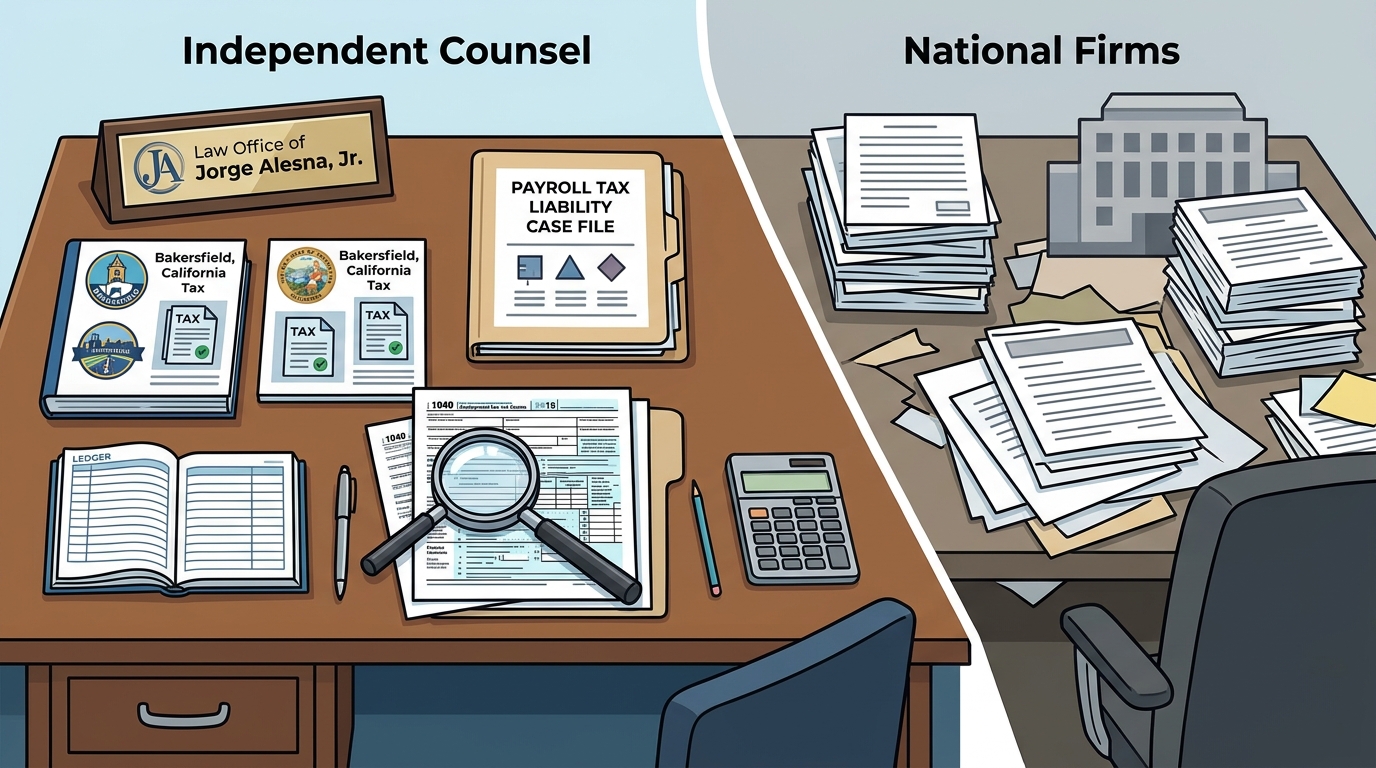
The choice between local independent counsel and national firms depends on your needs. National firms have large resources and national reach. They may have standardized procedures that are efficient for simple cases. However, they may lack the local knowledge needed for state-specific disputes. Independent counsel often provides more personalized attention and deeper local expertise.
| Feature | Local Independent Counsel | National Firm |
|---|---|---|
| Case Management | Often handled by the attorney of record | May be handled by junior staff or paralegals |
| Local Knowledge | Deep understanding of local agency practices | Standardized national procedures |
| Communication | Direct access to the attorney | May involve multiple layers of staff |
| Cost Structure | Varies, often hourly | May offer flat fees for standard cases |
For officers facing personal liability, the direct access provided by independent counsel can be a significant advantage. It allows for quick strategic decisions when new information emerges.
Handling Officers Without Control
Business officers often face personal liability for payroll taxes even if they did not have direct control over payroll. The law presumes that certain officers are responsible for ensuring taxes are paid. To challenge this, you must show that you did not have the authority to control the payment of taxes. This is a factual determination based on your role and actions. according to Unpaid Payroll Taxes
Establishing Lack of Control
Documentation is key. You need to show that you did not have access to bank accounts, did not sign checks, and did not have the authority to hire or fire payroll staff. An attorney can help build this record. They can gather affidavits and financial records to support your position.
Legal Rules and Taxpayer Protections
Taxpayers have specific rights under the law. The IRS and state agencies must follow due process. This includes providing notice and an opportunity to be heard. You have the right to representation by an attorney or other authorized representative. You also have the right to appeal an adverse decision. These protections ensure that the government cannot seize assets without following proper legal procedures.
Due Process Rights
Due process requires that the agency provide a clear statement of the charges and the evidence. It also requires that the agency consider your arguments. If the agency fails to follow these procedures, the assessment may be invalid. An attorney can identify procedural errors and use them to challenge the liability.
California and Bakersfield Specifics
California has its own payroll tax system administered by the Employment Development Department. The rules differ from federal rules in some ways. For example, California has specific tests for worker classification. The Law Office of Jorge Alesna, Jr. is located in Bakersfield and serves clients in Kern County and throughout California. Local counsel understands the specific practices of the EDD and the Franchise Tax Board. This local knowledge can be valuable in navigating state-specific disputes.
State vs. Federal
Resolving a federal payroll tax issue does not automatically resolve a state issue. You may need to handle both separately. The procedures and deadlines are different. An attorney familiar with both systems can coordinate the efforts to ensure consistency and efficiency.
The Impact of Timing on Outcomes
Timing is critical in tax disputes. Deadlines for protesting an assessment are strict. Missing a deadline can result in the loss of appeal rights. Once an assessment becomes final, the agency can begin collection actions. Acting early allows you to negotiate before the agency takes aggressive steps. It also allows you to preserve all available legal options.
Early Intervention
Contacting an attorney as soon as you receive a notice is the best strategy. It allows the attorney to review the notice and determine the best response. It also prevents the agency from moving forward without your input. Early action can often lead to a more favorable resolution.
Long-Term Results and Expectations
The goal of legal representation is to resolve the tax liability and protect your assets. The outcome depends on the facts of your case. Some cases are resolved through payment plans. Others are resolved through a reduction in the assessed amount. Some are resolved by challenging the personal liability. The long-term result is a clear path to resolving the debt and moving forward. It is important to have realistic expectations. The process can take time, but it provides a structured way to address the issue.
Key Takeaways
- Local independent counsel often provides more direct access and personalized attention than national firms.
- Verify attorney credentials through the State Bar of California website.
- Ask specific questions about who will handle your case and the strategy for challenging liability.
- Do not ignore notices; deadlines are strict and missing them can limit your options.
- Provide only the information requested to avoid expanding the scope of the audit.
- Officers without control can challenge personal liability by documenting their lack of authority.
- Timing is critical; act early to preserve appeal rights and negotiate before collection actions begin.
- California state payroll taxes are handled separately from federal taxes and require specific local knowledge.
Frequently Asked Questions
What is the difference between business liability and personal liability?
Business liability is the debt owed by the company. Personal liability is the debt owed by an individual officer. An officer can be held personally liable for unpaid payroll taxes if they are deemed a responsible person.
Can I be held liable if I did not sign the tax returns?
Yes. Liability is based on your role and authority, not just whether you signed the returns. If you had the authority to control the payment of taxes, you may be held liable.
How long does the process take?
The timeline varies. It can take several months to a few years depending on the complexity of the case and the agency's procedures. Acting early can help manage the timeline.
What is a Trust Fund Recovery Penalty?
The Trust Fund Recovery Penalty is a federal penalty that can be assessed against responsible persons for unpaid payroll taxes. It is a personal liability, not a business liability.
Do I need an attorney for a state payroll tax audit?
It is recommended. State payroll tax audits can result in significant liabilities and personal assessments. An attorney can help you navigate the process and protect your rights.
How do I find a tax attorney in Bakersfield?
You can search for attorneys in the State Bar of California directory. Look for attorneys who handle tax controversy and have experience with payroll tax issues. The Law Office of Jorge Alesna, Jr. is a local option in Bakersfield.
Conclusion
Choosing the right legal representation is a critical step in resolving payroll tax liability. For officers without direct control, local independent counsel may offer the personalized attention and local expertise needed to challenge personal liability. The Law Office of Jorge Alesna, Jr. provides guidance for taxpayers in Bakersfield and throughout California. If you are facing a payroll tax issue, consider consulting with a local tax controversy attorney to understand your options.
Contact the Law Office of Jorge Alesna, Jr. to discuss your situation.