

What Fees Resolve FTB Levies and Liens in Bakersfield California?
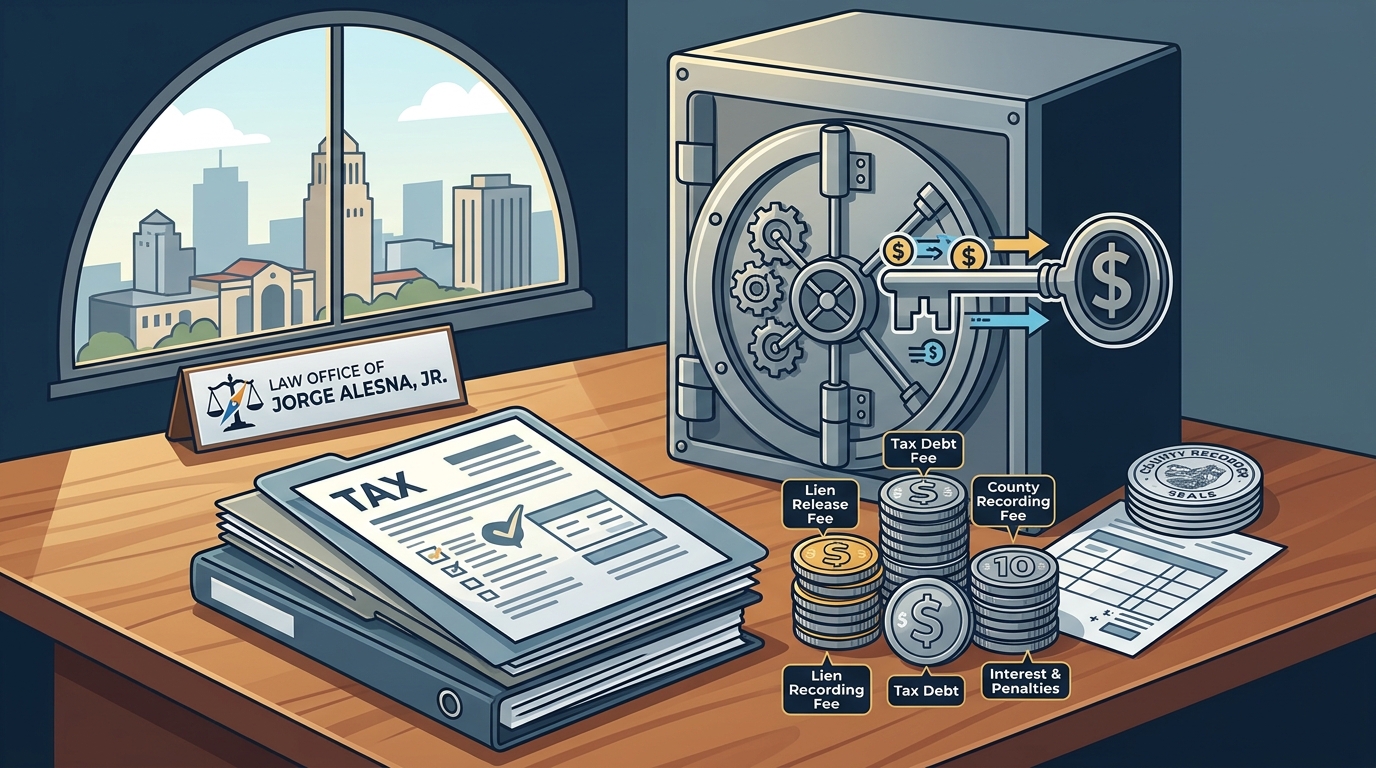
Resolving an FTB levy or lien in Bakersfield typically requires paying the underlying tax debt, interest, and penalties, plus specific administrative fees for lien releases. The Law Office of Jorge Alesna, Jr. helps taxpayers navigate these costs. This guide covers lien fees, levy release procedures, payoff requests, county recording fees, and the underlying tax liability.
FTB Lien Fees
A tax lien is a legal claim against property to secure unpaid tax debt. The Franchise Tax Board (FTB) may file a Notice of State Tax Lien when a taxpayer fails to pay a tax liability after receiving a notice and demand for payment. Filing a lien does not cost the taxpayer directly, but resolving it requires specific fees.
Release Fees
When the tax debt is paid in full, the FTB issues a Release of State Tax Lien. The FTB charges a fee for processing and mailing the release. This fee is separate from the tax debt itself. Taxpayers should budget for this administrative cost when planning a payoff.
Priority and Interest
Under California law, priority between state and federal tax liens is determined when each liability was first created. This is known as the statutory lien date. Interest and penalties continue to accrue until the debt is paid. Understanding the lien date is critical for determining the total payoff amount.
Levy Release Procedures
A levy is a legal seizure of property to satisfy a tax debt. Unlike a lien, which is a claim on property, a levy involves the actual taking of assets, such as bank accounts or wages. Releasing a levy often requires different procedures than releasing a lien.
Bank Levies
Bank levies can freeze funds needed for payroll, rent, and utilities. To release a bank levy, the taxpayer must usually pay the debt or demonstrate financial hardship. The FTB may release a levy if the taxpayer enters into an installment agreement or if the levy interferes with basic living expenses.
Wage Garnishments
Wage garnishments take a portion of a taxpayer's paycheck. Releasing a wage garnishment may require paying the debt in full or proving that the garnishment leaves the taxpayer with less than the minimum living allowance. The FTB reviews these requests based on specific financial thresholds.
Demand Payoff Requests
A demand payoff request is a formal inquiry to the FTB for the exact amount needed to satisfy a tax liability. This amount includes the principal tax, interest, and penalties. It is essential for closing a file and obtaining a lien release.
Calculating the Payoff
The payoff amount is calculated up to a specific date. Interest continues to accrue after that date. Taxpayers should request a payoff quote with a clear expiration date. This ensures they know exactly how much to pay to stop further accrual.
Payment Methods
The FTB accepts various payment methods, including electronic funds transfer and checks. Taxpayers should verify the correct payment instructions to avoid delays. Paying the full amount is the most direct way to resolve a lien.
County Recording Fees
In Bakersfield, which is located in Kern County, tax liens are recorded with the County Recorder's office. Recording a lien makes it a public record. Releasing the lien requires recording a Release of State Tax Lien with the same office.
Recording Costs
County recording fees vary by the number of pages in the document. The FTB may charge a fee for the release, and the county charges a fee for recording it. Taxpayers should budget for both costs. These fees are typically modest but are required for the lien to be officially removed from public records.
Impact on Credit
A recorded lien can affect credit scores. Once the release is recorded, the lien is removed from the public record. This can help improve creditworthiness over time. Taxpayers should monitor their credit reports to ensure the release is reflected accurately.
Underlying Tax Liability
The underlying tax liability is the core amount owed to the state. This includes the original tax assessment, plus any interest and penalties. Resolving a levy or lien requires addressing this underlying debt.
Assessment and Penalties
FTB assessments may include penalties for late filing or late payment. These penalties can significantly increase the total debt. Taxpayers may be able to request penalty abatement if they have a reasonable cause for the failure to pay. This requires a formal request and supporting documentation.
Installment Agreements
If paying the full amount is not possible, taxpayers may qualify for an installment agreement. This allows them to pay the debt over time. Entering into an agreement can stop further collection actions, such as levies, but the lien may remain until the debt is paid in full.
Levy Release Process
The levy release process involves communicating with the FTB to stop the seizure of assets. This process can be initiated by the taxpayer or by a representative. It requires clear documentation of the taxpayer's financial situation.
Submitting a Request
Taxpayers can submit a request for levy release by mail or phone. The request should include details about the specific levy and the reason for the release. The FTB will review the request and make a decision. This process can take several weeks.
Appealing a Denial
If the FTB denies a request for levy release, the taxpayer may have the right to appeal. This involves a formal protest or appeal process. An attorney can help navigate this process and present the strongest case for release.
Key Takeaways
- Resolving an FTB lien requires paying the underlying tax debt, interest, and penalties.
- The FTB charges a fee for processing and mailing a Release of State Tax Lien.
- County recording fees in Kern County are required to officially remove a lien from public records.
- Levy releases may be granted based on financial hardship or payment arrangements.
- Priority between state and federal liens is determined by the statutory lien date.
- Penalty abatement may reduce the total amount owed if reasonable cause is shown.
- Installment agreements can stop levies but may not remove liens until the debt is paid in full.
- Monitoring credit reports is important to ensure lien releases are reflected accurately.
Frequently Asked Questions
How much does it cost to release an FTB lien?
The cost includes the underlying tax debt, interest, penalties, the FTB release fee, and county recording fees. The total varies based on the size of the debt and the number of pages in the release document. according to Liens FTB ca
Can I get a lien release if I am paying in installments?
Generally, no. A lien is usually released only when the tax debt is paid in full. However, the FTB may subordinate the lien to allow for a real estate transaction or financing.
How long does it take to record a lien release in Kern County?
Recording times vary, but it typically takes a few business days to a few weeks. The FTB must first issue the release, and then it must be recorded with the County Recorder's office.
What is a statutory lien date?
A statutory lien date is the date when the tax liability was first created. This date determines the priority of the lien relative to other creditors, including federal tax liens.
Can I negotiate the penalties on my FTB debt?
Yes, you can request penalty abatement if you have reasonable cause for failing to pay on time. This requires a formal request and supporting documentation. An attorney can help prepare this request.
Will a lien release improve my credit score?
Once a lien is released and recorded, it is removed from public records. This can help improve your credit score over time, as the negative mark is no longer active.
What is the difference between a lien and a levy?
A lien is a legal claim against property, while a levy is the actual seizure of property. A lien affects your ability to sell or refinance property, while a levy takes your assets, such as bank funds or wages.
Conclusion
Resolving FTB levies and liens in Bakersfield requires a clear understanding of the fees involved, including the underlying tax debt, administrative release fees, and county recording costs. The Law Office of Jorge Alesna, Jr. provides guidance to help taxpayers navigate these complex processes. If you are facing an FTB levy or lien, to discuss your options.