

A California residency audit is a formal review by the Franchise Tax Board (FTB) to determine if you lived in California during a specific tax year. The agency examines your physical presence, economic ties, and intent to reside. If the FTB concludes you were a resident, you may owe tax on your worldwide income. The Law Office of Jorge Alesna, Jr. helps clients navigate these complex disputes in Bakersfield. For additional details, review the Checking your browser.
The Initial Contact and Scope of Review
The process typically begins with a letter from the FTB. This letter outlines the specific tax years under review and the reasons for the audit. The agency often initiates these reviews when a taxpayer files a non-resident return or reports a significant change in address. The FTB may also flag accounts based on data matching with other state agencies. Understanding the scope early is critical for your defense strategy. For additional details, review the Checking your browser.
During this phase, the FTB will request specific documentation. They often ask for a detailed timeline of your movements. They may also request proof of your primary residence, such as lease agreements or utility bills. The agency looks for indicators of domicile, which is your permanent home. A residency audit is not just about where you sleep; it is about where your life is centered.
Gathering Evidence of Domicile and Presence
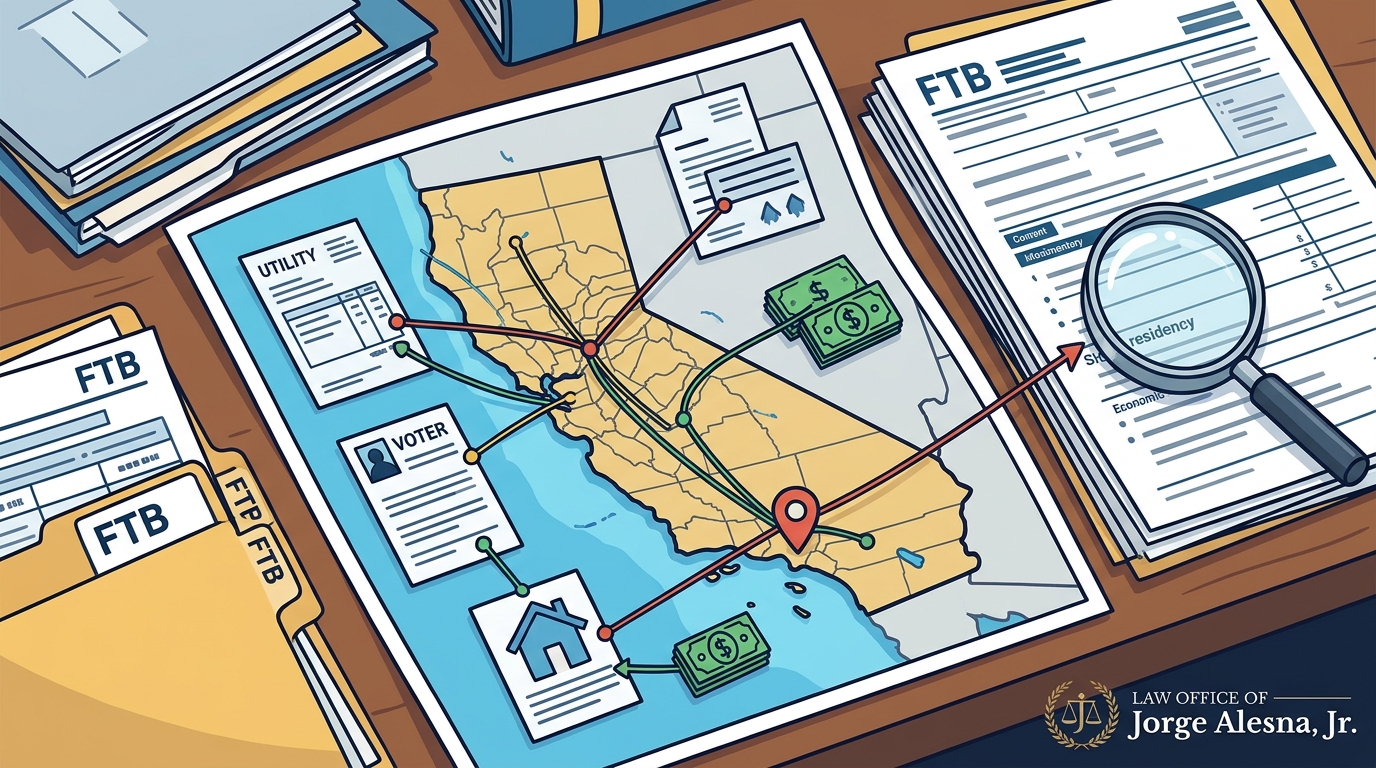
Domicile is the legal concept of your permanent home. It is the place you intend to return to after any absence. The FTB evaluates both physical presence and intent. Physical presence is measured by the number of days you spend in California. Intent is measured by your economic and social ties to the state. These two factors work together to determine your residency status.
The FTB will scrutinize your economic ties. They will look at where you keep your bank accounts and investment portfolios. They will examine where your business interests are located. They will also review where your family and close friends reside. Social ties are a strong indicator of intent. If your life remains centered in California, the FTB may argue you are still a resident.
At the Law Office of Jorge Alesna, Jr., we help clients organize this evidence effectively. We review your financial records and personal documents. We identify gaps in your documentation before the FTB does. This proactive approach strengthens your position during the audit.
Interviews and Information Requests
The FTB may schedule an interview with you. This interview is a formal part of the audit process. The agent will ask detailed questions about your life. They will probe into your daily routines and social connections. They will ask about your plans for the future. Your answers must be consistent with your written documentation.
Information requests can be extensive. The FTB may issue a formal demand for records. These requests can cover multiple years. They may ask for bank statements, credit card statements, and travel logs. They may also request records from your employer. Failure to respond to these requests can lead to adverse inferences. The agency may assume the missing information supports their case.
It is important to manage these communications carefully. Every document you provide becomes part of the official record. Inconsistencies can be used against you. The Law Office of Jorge Alesna, Jr. can represent you during these interactions. We ensure that your responses are accurate and strategically sound.
The Determination and Assessment
You have the right to appeal this determination. The appeal process allows you to present additional evidence. You can argue that the FTB misinterpreted the facts. You can also argue that the law was applied incorrectly. The appeal must be filed within a specific timeframe. Missing this deadline can limit your options. The Law Office of Jorge Alesna, Jr. assists clients in preparing strong appeals.
Consequences of a Residency Finding
If the FTB confirms your residency, the financial impact can be significant. California taxes worldwide income for residents. This means you may owe tax on income earned outside the state. The tax rate for high-income earners in California is among the highest in the nation. The difference between resident and non-resident status can be substantial.
There are also potential penalties for underpayment. The FTB may assess penalties if they believe you failed to report income. These penalties can add to the total amount owed. Interest accrues on the unpaid balance from the original due date. The total liability can grow quickly over time. Understanding these consequences is essential for planning your response.
Key Takeaways
- A residency audit examines both physical presence and intent to reside.
- Domicile is the legal concept of your permanent home and center of life.
- The FTB reviews economic ties, such as bank accounts and business interests.
- Interviews are a formal part of the audit and require careful preparation.
- You have the right to appeal the FTB's determination.
- Residency status affects how your worldwide income is taxed.
- Professional representation can help manage the audit process effectively.
Frequently Asked Questions
What triggers a California residency audit?
How long does a residency audit take?
The duration varies. Simple cases may take a few months. Complex cases with multiple years under review can take longer. The timeline depends on the responsiveness of the taxpayer and the complexity of the evidence.
Can I represent myself in a residency audit?
You can represent yourself, but it is often complex. The legal standards for domicile are nuanced. Professional guidance can help ensure your arguments are presented effectively.
What documents should I prepare?
What is the difference between residency and domicile?
Residency is a tax status based on physical presence and intent. Domicile is the legal concept of your permanent home. You can be a resident for tax purposes without having your domicile in that state, though the two are closely related. according to How to Handle
Can I appeal an FTB residency determination?
Yes, you can appeal the determination. The appeal allows you to present additional evidence and argue the facts. You must file the appeal within the deadline specified in the determination letter.
Navigating Your Residency Audit
A California residency audit is a serious matter that requires careful attention. The FTB examines your life in detail to determine your tax status. The process involves documentation, interviews, and potential appeals. The Law Office of Jorge Alesna, Jr. provides experienced guidance for clients in Bakersfield and across California. We help you understand the process and protect your interests. To discuss your specific situation, .