

Choosing between self-representation and professional counsel for California Franchise Tax Board (FTB) payment plans depends on your financial complexity and risk tolerance. The Law Office of Jorge Alesna, Jr. advises that while simple Installment Agreements can be managed independently, complex cases involving liens or levies often require legal strategy. This comparison outlines the practical differences in process, protection, and long-term outcomes for taxpayers in Bakersfield and Kern County. For additional details, review the Checking your browser.
Understanding FTB Payment Arrangements
An Installment Agreement is a formal agreement between a taxpayer and the FTB to pay a tax liability in monthly installments. A Collection Due Process (CDP) hearing is a legal proceeding where a taxpayer can challenge the validity of a proposed levy or lien. These mechanisms serve different purposes. An installment agreement stops active collection actions like wage garnishments, while a CDP hearing provides a forum to argue that the debt is incorrect or that the collection method is inappropriate. Understanding the distinction is critical before choosing a representation strategy. For additional details, review the Frequently Asked Questions.
Option 1: Negotiating FTB Payment Plans Yourself
Option 2: Hiring a Tax Attorney for FTB Matters
Engaging a tax attorney, such as the team at the Law Office of Jorge Alesna, Jr., introduces a layer of legal advocacy. An attorney is a licensed professional who can represent you before the FTB. This representation is not just about filling out forms. It involves analyzing your financial data to present the most favorable picture of your ability to pay. Attorneys can negotiate terms that may not be available through the standard online portal. For example, they can argue for a lower monthly payment based on specific deductions or expenses that the automated system might overlook. More importantly, attorneys can protect your assets. If the FTB proposes a levy on your bank account or a lien on your property, an attorney can intervene to stop these actions while a payment plan is being negotiated. This legal shield is a significant difference from the DIY approach.
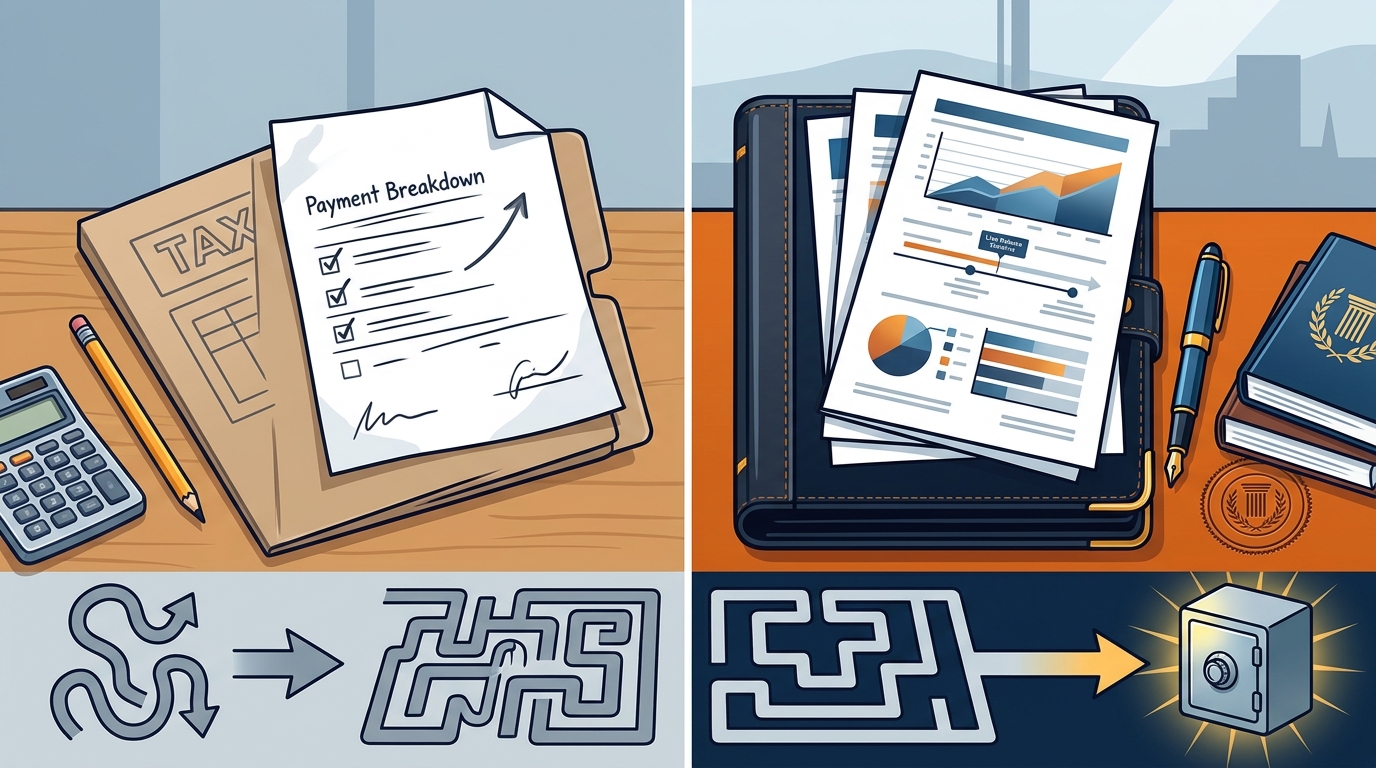
Comparison of DIY vs. Attorney Representation
| Criteria | DIY (Self-Representation) | Tax Attorney (Law Office of Jorge Alesna, Jr.) |
|---|---|---|
| Cost | Low (FTB fees only) | Higher (Legal fees + FTB fees) |
| Eligibility Flexibility | Strict automated criteria | Negotiated based on detailed financial analysis |
| Asset Protection | Minimal; collections may proceed during application | Active intervention to stop levies and liens |
| Hardship Handling | Agreement often revoked upon missed payment | Legal advocacy for modification or pause |
| Complexity Suitability | Simple, low-balance debts | Complex debts, business owners, high-balance cases |
When to Choose Each Option
Choose the DIY approach if your tax liability is relatively low, your financial situation is stable, and you have no significant assets at risk of seizure. This path is best for taxpayers who are comfortable navigating government portals and can strictly adhere to a fixed payment schedule. Choose a tax attorney if your debt is substantial, you own a business, or you are facing active collection actions like wage garnishments or bank levies. The Law Office of Jorge Alesna, Jr. is particularly suited for clients in Bakersfield who need to protect personal and business assets while resolving FTB disputes. If you are unsure about your current representation or feel your case is not being handled properly, independent legal guidance can provide clarity and protection.
Frequently Asked Questions
Can I switch from a DIY payment plan to attorney representation?
Yes. You can hire an attorney at any time. They can review your existing agreement and negotiate modifications with the FTB. However, there may be a transition period where you must continue making payments under the old terms until the new agreement is approved.
Does hiring an attorney guarantee that my tax debt will be reduced?
No. An attorney cannot guarantee a specific outcome or debt reduction. They provide legal strategy and advocacy to achieve the best possible result based on the facts of your case. Past results do not guarantee future outcomes.
What happens if I miss a payment on a DIY installment agreement?
The FTB will typically revoke the agreement and resume all collection activities, including levies and liens. You may be able to reapply, but the process starts over, and you may face stricter terms.
How long does it take to set up a payment plan with an attorney?
It varies. A simple agreement might take a few weeks. Complex cases involving CDP hearings or detailed financial analysis can take several months. The Law Office of Jorge Alesna, Jr. works to expedite the process while ensuring all legal protections are in place.
Is it worth paying for an attorney for a small tax debt?
For very small debts, the cost of legal representation may outweigh the benefit. However, if the small debt is triggering a wage garnishment or affecting your credit, an attorney may be able to stop the collection quickly, which could save you more in lost income than the legal fees.