

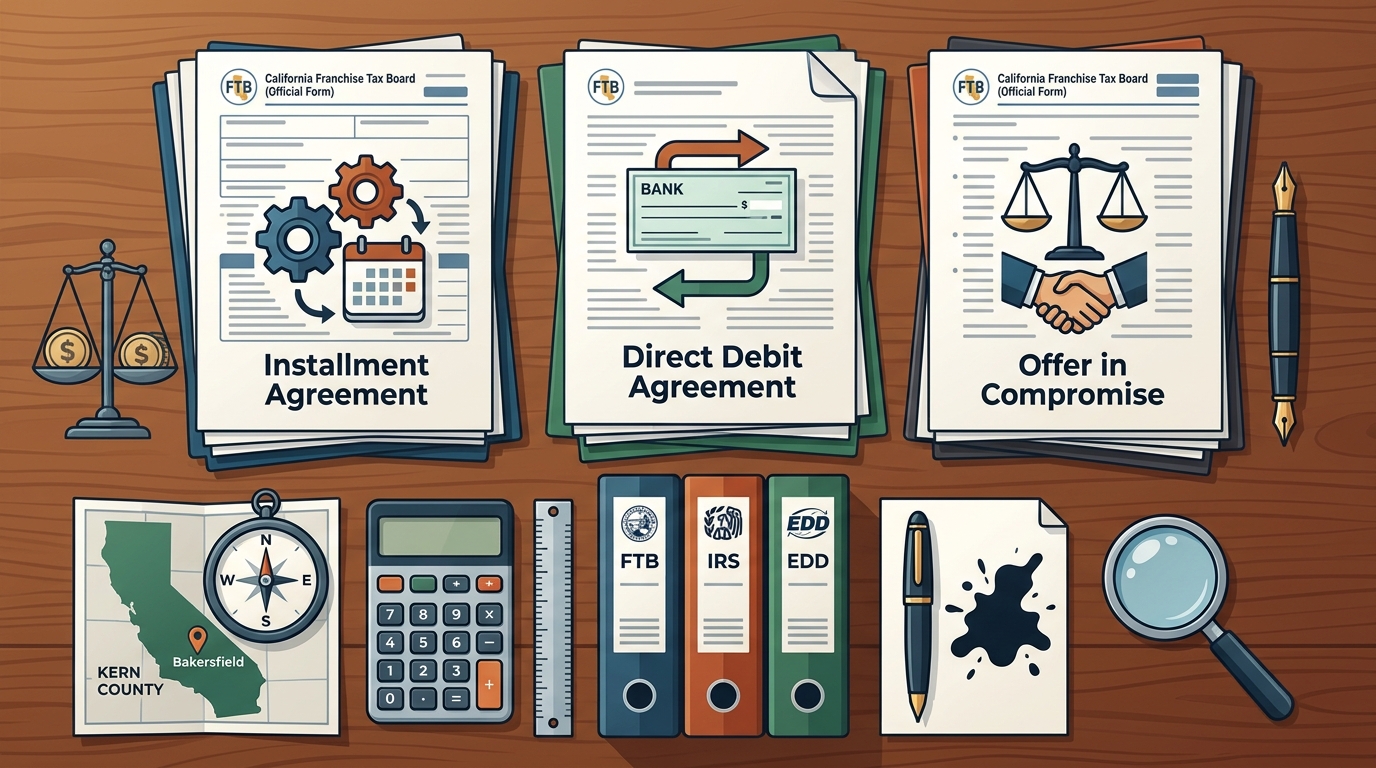
Setting up a payment plan with the Franchise Tax Board (FTB) in Bakersfield typically involves choosing between an installment agreement, a direct debit agreement, or an offer in compromise. The Law Office of Jorge Alesna, Jr. helps individuals and businesses in Kern County navigate these options to resolve tax debts while protecting personal assets. Understanding the specific requirements and implications of each arrangement is critical for long-term financial stability. For additional details, review the Checking your browser.
Understanding FTB Installment Agreements
An installment agreement is a formal arrangement that allows taxpayers to pay their tax debt in monthly installments over a set period. The FTB generally requires taxpayers to be current with all required tax filings before approving a standard installment plan. If you have unfiled returns, the agency may require you to file them before discussing payment terms. This foundational step ensures the agency has an accurate picture of your total liability. For additional details, review the About.
Eligibility and Duration
Direct Debit vs. Non-Direct Debit Plans
When establishing a payment plan, you must choose how the FTB will collect your monthly payments. A direct debit agreement automatically withdraws funds from your bank account on a specified date each month. This method often qualifies for lower interest rates or reduced penalties compared to non-direct debit plans. Non-direct debit plans require you to manually send a check or money order by the due date.
Banking Requirements
To set up a direct debit, you must provide valid banking information and ensure sufficient funds are available on the payment date. Insufficient funds can result in a returned payment fee and may cause the FTB to cancel the agreement. The Law Office of Jorge Alesna, Jr. advises clients to monitor their bank accounts closely during the setup process to avoid administrative errors that could jeopardize their standing with the agency.
Offer in Compromise as an Alternative
Evaluation Criteria
Impact on Credit and Assets
Entering into a payment plan with the FTB can have significant implications for your credit score and asset protection. While the FTB may report your tax debt to credit bureaus, maintaining a good standing on an approved payment plan can help mitigate negative impacts. However, if you default on the agreement, the FTB may resume collection actions, including liens and levies. These actions can freeze bank accounts and garnish wages, causing severe financial disruption.
Asset Protection Strategies
Before finalizing a payment plan, it is wise to review your asset structure. Certain assets may be exempt from levy under California law, but others are not. The Law Office of Jorge Alesna, Jr. assists clients in understanding which assets are at risk and how to structure their finances to minimize exposure. Proactive planning can prevent the agency from seizing essential resources while you work through your tax obligations.
Role of Legal Representation in Bakersfield
Navigating the FTB's payment plan options can be complex, especially for businesses or individuals with multiple tax liabilities. A tax controversy attorney can negotiate terms that better align with your financial reality. Legal representation ensures that your rights are protected and that the agency follows proper procedures during the review process. In Bakersfield, local knowledge of FTB practices can be advantageous in resolving disputes efficiently.
When to Seek Help
Consider seeking legal assistance if you receive a notice of intent to levy, if your initial payment plan request is denied, or if you are facing wage garnishment. These situations often require immediate intervention to prevent further financial harm. The Law Office of Jorge Alesna, Jr. provides independent guidance to clients who feel their matters are not being handled properly or who are unsure about their current representation.
Key Takeaways
- Installment agreements allow you to pay tax debt in monthly installments, but interest continues to accrue.
- Maintaining good standing on a payment plan can help protect your credit score and prevent asset levies.
- Legal representation can help negotiate favorable terms and protect your assets during the resolution process.
- Accurate financial documentation is essential for both installment agreements and offers in compromise.
Frequently Asked Questions
How long does it take to set up an FTB payment plan?
The review process typically takes several weeks. The FTB must verify your financial information and determine your ability to pay. Complex cases may take longer due to additional documentation requirements.
Can I modify my payment plan if my income changes?
Yes, you can request a modification if your financial situation changes significantly. You must provide updated financial statements to support the request. The FTB will review the new information and may adjust your monthly payment accordingly.
What happens if I miss a payment on my plan?
Missing a payment can result in a late fee and may cause the FTB to cancel your agreement. If the agreement is canceled, the agency may resume collection actions, including liens and levies. It is important to contact the FTB immediately if you anticipate a missed payment.
Does an FTB payment plan affect my credit score?
Yes, the FTB may report your tax debt to credit bureaus. However, maintaining a good standing on an approved payment plan can help mitigate negative impacts. Defaulting on the plan can significantly lower your credit score.
Can I use an offer in compromise if I have a business?
Yes, businesses can apply for an offer in compromise. The FTB evaluates the business's financial situation, including income, expenses, and assets. If the business cannot pay the full debt, an OIC may be a viable option.
What documents do I need to apply for a payment plan?
You will need to provide financial statements, including bank statements, pay stubs, and asset valuations. You must also be current with many required tax filings. The FTB may request additional documentation during the review process.