

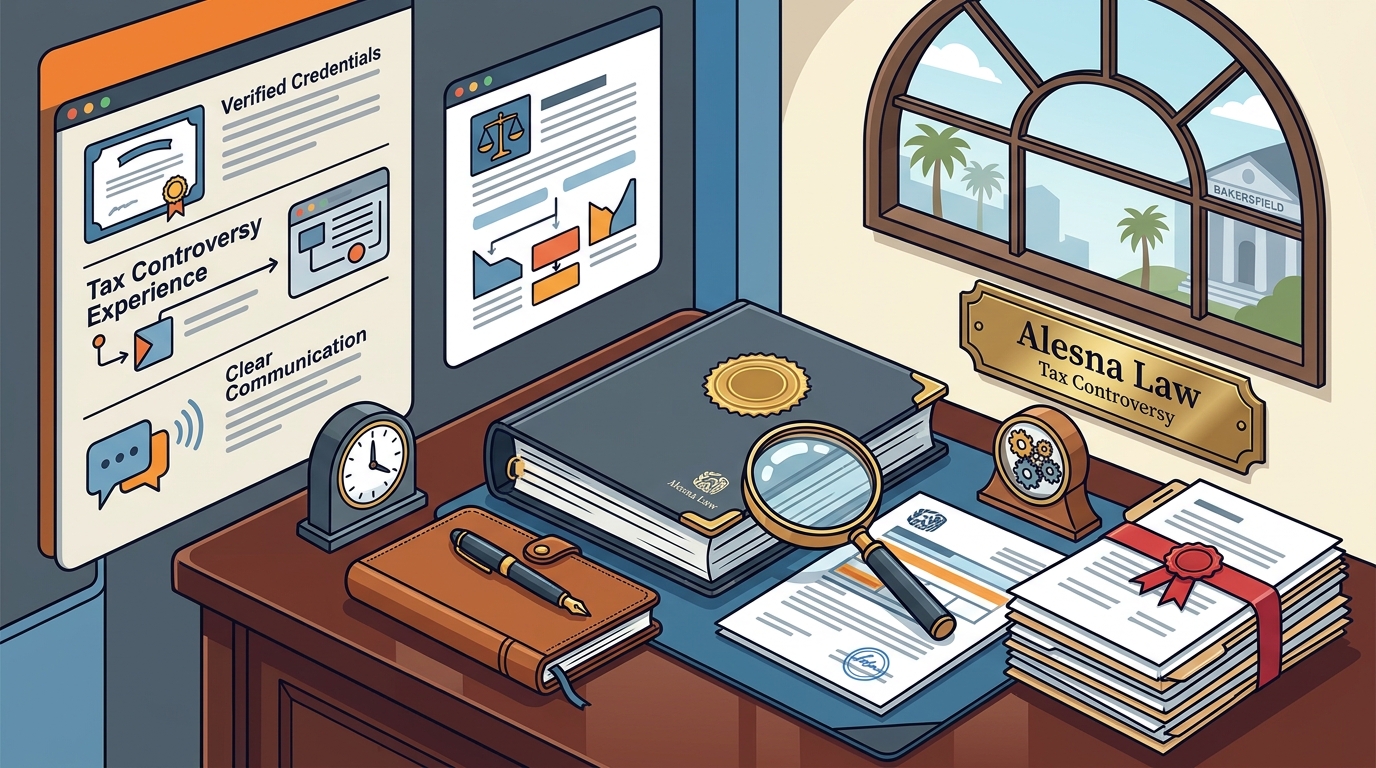
When selecting an IRS representation attorney, prioritize verified credentials, specific experience with tax controversy, and clear communication protocols. The Law Office of Jorge Alesna, Jr. in Bakersfield focuses on these core elements to help clients navigate complex federal and state tax disputes. Effective representation requires a professional who understands the procedural nuances of audits, appeals, and collections. For additional details, review the Checking your browser.
Verify Professional Credentials and Licensing
While many tax professionals can handle specific forms, only attorneys can provide legal advice and represent clients in Tax Court. The Law Office of Jorge Alesna, Jr. ensures that all clients are represented by licensed attorneys who understand the intersection of federal and state tax laws. This distinction is critical because non-attorney representatives may lack the authority to negotiate certain legal settlements or challenge procedural errors in court. For additional details, review the Customer Experience.
Assess Specific Tax Controversy Experience
General tax preparation experience does not always translate to effective controversy resolution. Tax controversy is the legal process of disputing tax assessments, penalties, or collection actions with the IRS or state agencies. You should look for an attorney who has handled cases similar to yours, whether that involves an audit, a notice of federal tax lien, or a wage levy. Specific experience ensures the attorney understands the strategic timing of responses and the available administrative remedies. For additional details, review the Frequently Asked Questions.
At the Law Office of Jorge Alesna, Jr., the practice focuses on resolving complex tax disputes, including financial hardship cases involving liens, levies, and wage garnishments. This specialized focus allows the firm to develop strategies that protect personal and business assets. When interviewing potential attorneys, ask about their recent case types and how they approach specific enforcement actions. An attorney with deep experience in a specific area, such as California Franchise Tax Board appeals, will be better equipped to navigate the unique procedural rules of that agency.
Evaluate Communication and Case Management
Clear communication is a vital component of effective legal representation. An IRS representation attorney is a professional who must keep clients informed about case status, deadlines, and strategic decisions. You should establish expectations for how often you will receive updates and who will be your primary point of contact. Poor communication can lead to missed deadlines, which may result in default judgments or escalated penalties.
Understand Fee Structures and Engagement Terms
Financial transparency is essential when hiring legal counsel. An IRS representation attorney is a service provider who must outline their billing methods, including hourly rates, flat fees, or contingency arrangements. You should request a written engagement letter that details the scope of services, estimated costs, and termination clauses. Understanding the financial commitment helps you budget for the dispute and avoids unexpected expenses.
Key Takeaways
- Verify that the attorney holds an active legal license and is in good standing with the state bar.
- Look for specific experience in tax controversy, including audits, appeals, and collections.
- Establish clear communication protocols to ensure you are kept informed of case developments.
- Request a written engagement letter that details fee structures and scope of services.
- Choose an attorney who provides independent guidance and explains legal options clearly.
- Consider the attorney's familiarity with both federal and state tax agencies relevant to your case.
Frequently Asked Questions
What is the difference between a tax preparer and a tax attorney?
A tax preparer files returns, while a tax attorney provides legal advice and represents clients in disputes. Only attorneys can represent clients in Tax Court and provide legal opinions on liability.
Can I represent myself in an IRS audit?
Yes, you can represent yourself, but an attorney can help navigate complex legal issues and protect your rights. Professional representation often leads to more favorable outcomes in complex cases.
How much does an IRS representation attorney cost?
What should I ask during an initial consultation?
Ask about the attorney's experience with similar cases, their communication style, and their fee structure. Also, ask how they approach your specific type of tax dispute.
Do I need an attorney for a simple tax notice?
Simple notices may not require an attorney, but if the notice involves significant penalties or collection actions, professional advice is recommended. An attorney can assess the best course of action.
How long does an IRS dispute typically take?
Timelines vary widely depending on the complexity of the case and the agency involved. Some disputes are resolved in months, while others may take years. An attorney can provide a realistic estimate based on your specific situation.