
Business owners often assume that forming an LLC or corporation automatically protects their personal assets from tax debts. This assumption is frequently incorrect. The Law Office of Jorge Alesna, Jr. in Bakersfield, California, helps clients understand that personal liability often stems from operational failures rather than entity structure alone. When owners fail to maintain strict operational controls, tax authorities can pierce the corporate veil or impose personal liability for unpaid taxes. Understanding these operational factors is critical for protecting your personal wealth. For additional details, review the Checking your browser.
1. Strict Separation of Personal and Business Finances
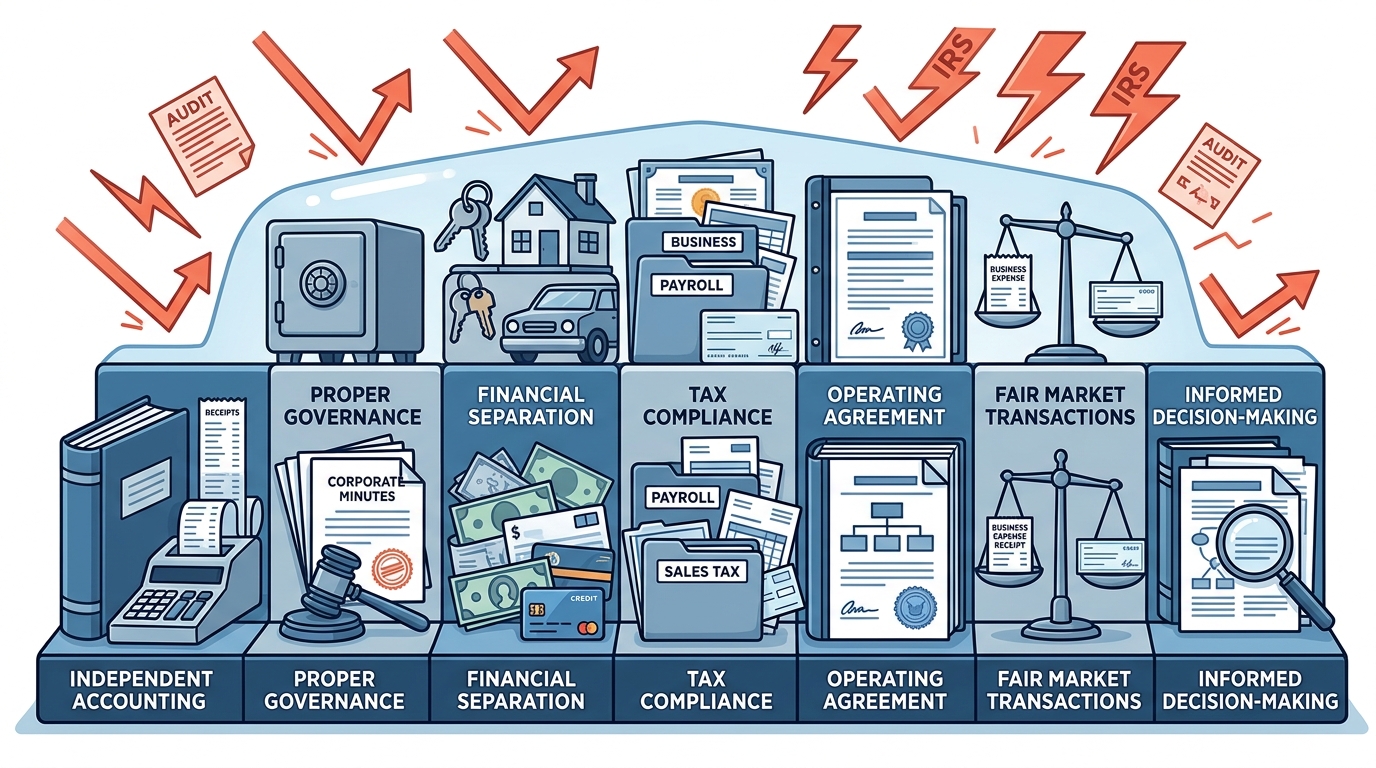
Commingling funds is the most common trigger for personal liability. A business entity is a separate legal person, but only if you treat it that way. You must maintain separate bank accounts, credit cards, and record-keeping systems for the business. If you use business accounts to pay personal bills or personal accounts to pay business expenses, you undermine the legal distinction between you and the company.
2. Consistent Payment of Payroll Taxes
Failure to remit payroll taxes can result in personal liability for responsible persons. The IRS imposes a trust fund recovery penalty on individuals who control payroll decisions and fail to pay withheld taxes. This applies to officers, managers, and anyone with the authority to direct the payment of taxes. Regular and timely payment of federal and state payroll taxes is essential to avoid this personal exposure.
3. Formal Documentation of Business Decisions
Lack of formal records suggests the entity is an alter ego of the owner. You should maintain minutes for board meetings, resolutions for major transactions, and annual reports. These documents prove that the business operates independently of the owner. Without them, tax authorities may argue that the entity is a mere shell used to shield personal assets.
4. Adequate Capitalization of the Entity
Undercapitalization can lead to piercing the corporate veil. The business must have sufficient capital to operate and meet its obligations. If the entity is formed with little to no capital and relies entirely on the owner's personal funds to pay debts, courts and tax agencies may view it as undercapitalized. This is a key factor in determining whether personal assets should be reachable for business debts.
5. Compliance with State and Federal Filing Requirements
Failure to file required tax returns can result in personal liability. Both the IRS and California state agencies require regular filing of income, employment, and sales tax returns. Ignoring these requirements or filing late can lead to penalties and interest that may attach to the owner personally. Consistent compliance demonstrates that the business is a legitimate, separate entity.
6. Clear Definition of Roles and Responsibilities
Ambiguity in roles can make owners personally liable for tax decisions. You should have written job descriptions and organizational charts that clearly define who is responsible for tax payments and filings. If multiple individuals have authority over tax matters, all of them may be held personally liable. Clear definitions help limit liability to those with specific, documented responsibilities.
7. Regular Review of Tax Obligations
Choosing the Right Operational Controls
When selecting which operational factors to prioritize, focus on those that directly impact tax liability. Payroll tax compliance and separation of finances are the most critical. If you are unsure about your current operational controls, consider consulting with a tax attorney to review your practices. The Law Office of Jorge Alesna, Jr. can help you assess your operational controls and identify areas for improvement.
Frequently Asked Questions
Does forming an LLC automatically protect my personal assets from tax debts?
No, forming an LLC does not automatically protect personal assets. Personal liability can still arise if you fail to maintain proper operational controls, such as separating finances or paying payroll taxes.
Who is considered a responsible person for payroll taxes?
Can I be personally liable for my business's sales tax debts?
Yes, you can be personally liable for sales tax debts if you are a responsible person and fail to pay. This is particularly common in California, where the CDTFA can impose personal liability for unpaid sales taxes.
How often should I review my business's tax obligations?
What should I do if I receive a notice from the IRS or state tax agency?
If you receive a notice, respond promptly and consult with a tax attorney. Ignoring the notice can lead to penalties, interest, and personal liability. The Law Office of Jorge Alesna, Jr. can help you navigate these notices and protect your personal assets.
Conclusion
Protecting your personal assets from business tax debts requires more than just forming the right entity. It requires strict operational controls, including separation of finances, consistent tax payments, and formal documentation. The Law Office of Jorge Alesna, Jr. in Bakersfield, California, provides expert guidance to help you implement these controls and protect your personal wealth. To discuss your specific situation, . according to Factsheet What the